Precision health: Improving health for each of us and all of us
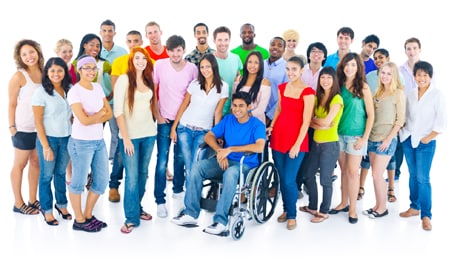
Your genes, behaviors (such as exercise and eating habits), and environment are all factors that affect your health. The goal of precision health is to protect your health by measuring these factors and acting on them. Interventions can be tailored to you, rather than using the same approach for everyone.
You might have heard the terms “precision medicine” and “precision health” and wondered how they relate to you. Precision medicine, also called personalized medicine, helps your doctor find your unique disease risks and treatments that will work best for you. Precision health is broader and it includes precision medicine but also approaches that occur outside the setting of a doctor’s office or hospital, such as disease prevention and health promotion activities. Precision health involves approaches that everyone can do on their own to protect their health as well as steps that public health can take (sometimes called “precision public health”).
Let’s explore how precision health approaches can better predict, prevent, treat, and manage disease for you and your family.Prediction and Prevention
- Family health history can help you know which diseases you are more likely to get: Having family members with certain chronic diseases such as diabetes ,heartdisease, or hypertension, can sometimes mean you are more likely to get that disease. Collecting your family health history and sharing it with your doctor can help you take steps to prevent disease or find it early. In some cases, your doctor might recommend genetic counselling and testing for a disease that runs in your family.
Example:
When talking about your family health history, your doctor asks if anyone in your family has had breast cancer. You mention that your mother was diagnosed at age 51. Your doctor tells you that having a parent or sibling with breast cancer makes you more likely to get breast cancer. Based on the current guidelines, she recommends starting yearly mammograms early, at age 40.
- Personal devices can keep track of your health information: Mobile health applications on your smart device are an easy way to track information, such as nutrition, physical activity, and blood pressure. Measurements are taken in real-time and can inform you of progress and even alert you to changes that could mean you need to seek medical care, although these devices are not a replacement for regular checkups.
Example:
Joe, an active 49 year old man with no history of heart problems, got an alert on his smartphone that he had atrial fibrillation. He went to a nearby urgent care center, where doctors confirmed that he had the condition. Left untreated, atrial fibrillation can lead to stroke. By finding out about his atrial fibrillation early, Joe could take steps to treat it before he had any serious health problems.
- Social media can help public health workers track disease and communicate health information: Public health researchers are exploring how social media could be used to help track disease outbreaks, for example by looking for posts that self-report symptoms of a disease. Health departments can use social media to communicate important health information to a large audience.
Example:
Your state health department posts a message on social media in response to seeing an increase in the number of flu cases. The post details how to prevent the flu, what to do if you think you have it, and who is most at risk for complications. You’ve been busy and haven’t had time to get a flu shot, but seeing this post encourages you to get one the next day.
Example:
- Genome sequencing can help find, track and control infectious disease outbreaks: The type of germ that’s making people sick can be identified using genetic sequencing, which shows the DNA fingerprint of the germ. Doctors and public health officials can more easily find out which people’s illnesses are caused by the germ. Knowing exactly which germ is making their patients sick can help doctors determine the treatment that will work best. Public health workers can more accurately track the germ and find its source.
After eating at a restaurant, you and your friend have symptoms of food poisoning. You are seen by your doctor, who orders tests of your stool. When Salmonella bacteria are identified in your stool, your doctor alerts the health department. The health department then performs genetic testing on the Salmonella bacteria from your stool sample and determines that they are from as that otherconfirmed cases in your area, all of whom reported eating papayas. Using this information, public health workers then find the source is a certain brand of papayas and remove them from grocery stores and restaurants, thereby preventing additional cases.
- Newborn screening can find medical conditions early to prevent complications: Babies born in the United States are checked for certain medical conditions soon after birth. This is called newborn screening, which includes a blood test and screenings for hearing loss and heart defects. Newborn screening can prevent disability or death by identifying conditions and treating them sooner.
CDC 2021
 A KSHAMICAMD WEBSITE