Author: slanka

  • TOO MUCH BELLY FAT IS NOT SAFE

    By American Heart Association News. APRIL. 2021

    Peter Dazeley/The Image Bank, Getty Images
    (Peter Dazeley/The Image Bank, Getty Images)

    People with too much fat around their midsections and vital organs are at increased risk for heart disease, even if their body mass index falls within what is considered a healthy range, according to a new scientific report.

    The statement from the American Heart Association, published Thursday in its journal Circulation, summarizes research on the ways in which belly fat and other measures of obesity affect heart health. Belly fat also is referred to as abdominal fat and visceral adipose tissue, or VAT.

    “Studies that have examined the relationship between abdominal fat and cardiovascular outcomes confirm that visceral fat is a clear health hazard,” writing committee chair Dr. Tiffany Powell-Wiley said in a news release. Powell-Wiley is chief of the Social Determinants of Obesity and Cardiovascular Risk Laboratory at the National Heart, Lung, and Blood Institute in Bethesda, Maryland.

    Whether a person has too much belly fat is typically determined using the ratio of waist circumference to height (taking body size into account) or waist-to-hip ratio. This measurement has been shown to predict cardiovascular death independent of BMI, a measure of obesity that is based on height and weight.

    Experts recommend both abdominal measurement and BMI be considered during regular health care visits because even in healthy weight individuals, it could mean an increased heart disease risk. Abdominal obesity is also linked to fat accumulation around the liver. That often leads to non-alcoholic fatty liver disease, which adds to cardiovascular disease risk.

    Worldwide, around 3 billion people are overweight or have obesity. The “obesity epidemic contributes significantly” to many chronic health conditions and cardiovascular disease cases around the world, Powell-Wiley said. Specifically, obesity is associated with a higher risk of coronary artery disease and death from cardiovascular disease. It contributes to high cholesterol, Type 2 diabetes, high blood pressure and sleep disorders.

    Yet some people whose BMI classifies them as obese, but who have low levels of abdominal fat, are at lower risk for heart problems, the analysis showed.

    Meeting federal guidelines for 150 minutes of physical activity per week may be sufficient to reduce abdominal fat, the analysis found, with no additional loss from longer activity times. Exercise alone or in combination with diet changes have been shown in some instances to reduce abdominal obesity even without weight loss.

    Also, weight loss from lifestyle changes improves blood sugar, blood pressure, and triglyceride and cholesterol levels – a cluster of factors referred to as metabolic syndrome, according to the new statement. It also reduces inflammation, improves blood vessel function and helps non-alcoholic fatty liver disease.

    In addition, intense weight loss may help curb atrial fibrillation, a quivering or irregular heartbeat, according to the report. Estimates suggest obesity may account for one-fifth of all cases.

    The new scientific statement evaluated research on managing and treating obesity, particularly abdominal obesity. Experts concluded that reducing calories and aerobic exercise were the most beneficial.

    Bariatric weight loss surgery has been shown to reduce the risk for coronary artery disease better than weight loss achieved without surgery. This may be due to the larger amount of weight loss achieved with surgery and the resultant changes in metabolism that are typical after bariatric surgery.

    The statement also addresses what’s known as the “obesity paradox.” That is, even though overweight and obesity are strong risk factors for cardiovascular disease, in the short-term, they don’t always mean patients have worse survival outcomes. The analysis concludes this may be because people classified as overweight or obese are often screened earlier for cardiovascular disease than people with healthy weight, so they are diagnosed and treated earlier.

    “The underlying mechanisms for the obesity paradox remain unclear,” Powell-Wiley said. “Despite the existence of the paradox for short-term cardiovascular disease outcomes, the data show that patients with overweight or obesity suffer from cardiovascular disease events at an earlier age, live with cardiovascular disease for more of their lives and have a shorter average lifespan than patients with normal weight.”

    If you have questions or comments about this story, please email editor@heart.org.

  • CINNAMON A HEALTHY SPICE

    The bark of various cinnamon species is one of the most important and popular spices used worldwide not only for cooking but also in traditional and modern medicines. Overall, approximately 250 species have been identified among the cinnamon genus, with trees being scattered all over the world

    CHEMISTRY

    CInnamon is mainly used in the aroma and essence industries due to its fragrance, which can be incorporated into different varieties of foodstuffs, perfumes, and medicinal products The most important constituents of cinnamon are cinnamaldehyde andtrans-cinnamaldehyde (Cin), which are present in the essential oil, thus contributing to the fragrance and to the various biological activities observed with cinnamon [4]. A study on Cinnamomum osmophloeum (C. osmophloeum) indicated that the essential oil from cinnamon leaves contains a high level of Cin. Consequently, C. osmophloeum is also used as an alternative spice for C. cassia   [5]. One of the major constituents of essential oil extracted from C. zeylanicum named (E)-cinnamaldehyde has an antityrosinase activity [6], while cinnamaldehyde is the principal compound responsible for this activity [7].

    Cinnamon bark contains procyanidins and catechins The components of procyanidins include both procyanidin A-type and B-type linkages [9–11]. These procyanidins extracted from cinnamon and berries also possess antioxidant activities

    Cinnamon is a spice that comes from the branches of trees of the Cinnamomumfamily. It is native to the Caribbean, South America, and Southeast Asia.

    People have used cinnamon since 2000 BC in Ancient Egypt, where they regarded it highly. In medieval times as good for health.

    As a spice, cinnamon is available in as pieces of bark or ground as a powder. People also use cinnamon essential oil and supplements.

    There are two main types of cinnamon: cassia and Ceylon. The two have different nutritional profiles.

    There are many types of cinnamon, all of which come from the inner bark of several species of evergreen trees in the Cinnamomum genus. However, there are two varieties that you will most likely find commercially available for use in food products: Cassia and Ceylon.

    This typically labelled as just ‘cinnamon’ in grocery stores, is Cinnamomum cassia, or Cassia cinnamon. It has a strong, rich, slightly bitter flavour that makes it an ideal choice for heavier baked goods and tends to be quite inexpensive. You might also come across Saigon or Korintje cinnamon, both of which are varieties of Cassia cinnamon.

    Ceylon Cinnamon

    Cinnamomum verum, also called true cinnamon or Ceylon cinnamon, is a more expensive and difficult to find cinnamon variety. Ceylon has a lighter, sweeter flavour than Cassia. Historically, Ceylon was more common in Europe and North America, but changing trade systems have shifted favour to Cassia cinnamon. Most traditional recipes from Europe and Mexico that call for cinnamon use Ceylon cinnamon, and require this type for an authentic flavour.

    It is difficult to tell the difference between Cassia and Ceylon cinnamon visually when they are in powder form, but the cinnamon sticks look quite different. Cassia cinnamon sticks are one thick, firm layer of bark, rolled up, whereas Ceylon is several thin, soft layers of bark rolled together. Ceylon cinnamon also tends to be lighter in colour than Cassia.

    Some studies have suggested that the compounds in cinnamon have antioxidant, anti-inflammatory, antidiabetic, and antimicrobial properties, and that they might offer protection from cancer and cardiovascular disease, among other conditions. However, more evidence is needed to confirm cinnamon’s benefits.

    Scientists have found evidence of some possible health benefits of cinnamon. These are NOT established and NOT approved. You should not take cinnamon without discussing with your physician

    Improving fungal infections

    Cinnamon oil may help treat some types of fungal infections.

    A 2016 laboratory study found that cinnamon oil was effective against a type of Candida that affects the bloodstream. This may be due to its antimicrobial properties.

    If further research confirms these findings, cinnamon oil could play a role in treating this type of infection.

    Influencing blood sugar levels

    Animal studies have shown that cassia cinnamon may reduce blood sugar levels, according to a 2015 review.It’s not yet clear if cinnamon is good for diabetess. Research findings have been mixed, and the American Diabetes Association has not approved it

    Insulin is one of the key hormones that regulate metabolism and energy use. It is also essential to transport from the blood stream to the cells in the boy

    The problem is that many people are resistant to the effects of insulin.

    This is known as insulin resistance, a hallmark of serious conditions like metabolic syndrome and type 2 diabetes. The good news is that cinnamon can dramatically reduce insulin resistance which is how it is believe to help in diabetes

    .

    helping in Alzheimer’s disease

    Some animal studies have suggested that cinnamon may help prevent Alzheimer’s disease.

    According to researchers, an extract present in cinnamon bark, called CEppt, contains properties that may prevent symptoms from developing.

    Mice who received the extract experienced a decrease in features of Alzheimer’s, such as amyloid plaques, and improvements in their ability to think and reason.

    If further research confirms its effectiveness, this extract but not necessarily whole cinnamon — may be useful in developing therapies for Alzheimer’s. Research is ongoing.

    may have Protective efect against HIV

    In 2000, a study of extracts of Indian medicinal plants found that cinnamon may help protect against HIV.

    Scientists tested 69 extracts in a laboratory. Cinnamomum cassia, or cinnamon bark, and Cardiospermum helicacabum, which is the cinnamon shoot and fruit, were most effective in reducing HIV activity.

    In a 2016 laboratory study, scientists found that an extract from cinnamon showed anti-HIV activity.

    This does not mean that foods containing cinnamon can treat or prevent HIV, but cinnamon extracts could one day become a part of HIV therapy.

    may help multiple sclerosis

    Experts have tested cinnamon for activity against multiple sclerosis (MS).

    In one study, researchers gave mice a mixture of cinnamon powder and water and ran some tests. It appeared that cinnamon could have an anti-inflammatory effect on the central nervous system, including parts of the brain.

    Studies have also suggested that cinnamon may protect regulatory T cells, or “Tregs,” which regulate immune responses.

    People with MS appear to have lower levels of Tregs than people without the condition. In mouse studies, cinnamon treatment has prevented the loss of certain proteins specific to Tregs.

    Scientists have also found that cinnamon treatment restored myelin levels in mice with MS. MS occurs when the myelin coating on nerve cells becomes damaged.

    MAY Lower the effects of high fat meals

    In 2011, researchers concluded that diets rich in “antioxidant spices,” including cinnamon, may help reduce the body’s negative response to eating high fat meals.

    Six people consumed dishes containing 14 g of a spice blend. Blood tests showed that antioxidant activity increased by 13%insulin response fell by 21%, and triglycerides fell by 31%.

    Treating and healing chronic wounds

    Cinnamaldehyde, one of the main active components of cinnamon, may help fight various kinds of infection.

    Cinnamon oil has been shown to be posssibly effectively treat respiratory tract infections caused by fungi.

    It can also shown inhibit the growth of certain bacteria, including Listeria and Salmonella 

    However, the evidence is limited and so far cinnamon has not been shown to reduce infections in any consistent basis

    The antimicrobial effects of cinnamon may also help prevent tooth decay and odor and some people use cinnamon toothpaste though its medicinal value has not been clinically established

    MAY reduce the risk of cardiovascular disease

    Various compounds in cinnamon may benefit the cardiovascular system. Cinnemaldehyde, for example, lowered blood pressure in an animal study.

    In a 2014 study, rats that received long-term treatment involving cinnamon and aerobic training had better heart function than those that did not.

    .

    anti- tumor effects

    The authors of one article note that cinnamaldehydes may have antitumor and anticancer properties.

    In the study, scientists treated mice with cancer using an extract of cinnamon and cardamom. Tests found lower levels of oxidative stress in the melanoma cells of the mice that received the treatment.

    check with your doctor before taking cinnamon

    So

    However, according to the NCCIH, “Studies done in people don’t support using cinnamon for any health condition.”

    NUTRITION

    According to the U.S. Department of Agriculture, a teaspoon of ground cinnamon weighing 2.6 g contains:

    • energy: 6.42 calories
    • carbohydrates: 2.1 g
    • calcium: 26.1 milligrams (mg)
    • iron: 0.21 mg
    • magnesium: 1.56 mg
    • phosphorus: 1.66 mg
    • potassium: 11.2 mg
    • vitamin A: 0.39 micrograms

    It also contains traces of vitamins B and K and the antioxidants choline, beta-carotene, alpha-carotene, beta-cryptoxanthin, lycopene, lutein, and zeaxanthin.

    Antioxidants can reduce oxidative stress and may help prevent cancer, type 2 diabetes, and many other conditions.

    In food, people usually eat only a small amount of cinnamon. Therefore, the nutrients it contains will not play a significant role in the diet.

    A person can also try these recipes:

    side effects

    Not all cinnamon is created equal.

    The Cassia variety contains significant amounts of a compound called coumarin, which is believed to be harmful in large doses. All cinnamon should have health benefits, but Cassia may cause problems in large doses due to the coumarin content.Ceylon (“true” cinnamon) is much better in this regard, and studies show that it’s much lower in coumarin than the Cassia variety

    Unfortunately, most cinnamon found in supermarkets is the cheaper Cassia variety.

    Cinnamon contains coumarin. This plays a role in creating warfarin, the common blood-thinning drug.

    Consuming too much coumarin can lead to liver damage and affect coagulation. so adding cinnamon or cassia to their diet if they:

    • take anticoagulants or other drugs
    • have diabetes which it may cause the blood sugar to go too low
    • have a liver condition

    Cassia cinnamon powder, a common ingredient in foods in the U.S., contains more coumarin than Ceylon cinnamon powder.

    A German study from 2010 found that coumarin content varies widely, even in samples of cinnamon from the same tree.

    People should never use cinnamon in any form as a replacement for medical treatments for health conditions.

    Cinnamon is available as a supplement, as well as a spice. Supplements may have an impact on health and disease. However, the Food and Drug Administration (FDA) do not regulate supplements, so there might be concerns about quality, purity, and strength. People should always ask their doctor before using supplements

    CINNAMON HAS AS SERIOUS. SIDE EFFECTS PLEASE DO NOT TAKE WITHOUT TALKING TO YOUR DOCTOR

  • MEAL PLANNING

    based on U.S. DEPARTMENT OF AGRICULTURE

    Meal PlanninG FOR PERSONS WITH DIABETES AND PREDIABETES BUT USEFUL FOR THOSE WITH OBESITY

    THIS IS FOR GENERAL INFORMATION ONLY -CHECK WITH YOUR DOCTOR BEFORE IMPLEMENTING THESE RECOMMENDATIONS

    A meal plan is your guide for when, what, and how much to eat to get the nutrition you need while keeping your blood sugar levels in your target range. A good meal plan will consider your goals, tastes, and lifestyle, as well as any medicines you’re taking.

    WHAT IS A GOOD MEAL PLAN

    A good meal plan will also:
    • Include more nonstarchy vegetables, such as broccoli, spinach, and green beans.
    • Include fewer added sugars and refined grains, such as white bread, rice, and pasta with less than 2 grams of fiber per serving.
    • Focus on whole foods instead of highly processed foods as much as possible.

    CARBOHYDRATES

    Carbohydrates in the food you eat raise your blood sugar levels. How fast carbs raise your blood sugar depends on what the food is and what you eat with it. For example, drinking fruit juice raises blood sugar faster than eating whole fruit. Eating carbs with foods that have protein, fat, or fiber slows down how quickly your blood sugar rises. This is not healthy

    You’ll want to plan for regular, balanced meals to avoid high or low blood sugarlevels. Eating about the same amount of carbs at each meal can be helpful. Counting carbs and using the plate method are two common tools that can make planning meals easier too.

    Counting Carbs

    Keeping track of how many carbs you eat and setting a limit for each meal can help keep your blood sugar levels in your target range. Work with your doctor or a registered dietitian to find out how many carbs you can eat each day and at each meal, and then refer to this list of common foods that contain carbs and serving sizes. For more information, see Carb Counting.

    portions on plate. Nonstarchy vegetables at 50, carb foods at 24 and protein foods at 25%. Also, water or 0-calorie drink

    The Plate Method

    portions on plate. Nonstarchy vegetables at 50, carb foods at 24 and protein foods at 25%. Also, water or 0-calorie drink

    It’s easy to eat more food than you need without realizing it. The plate method is a simple, visual way to make sure you get enough nonstarchy vegetables and lean protein while limiting the amount of higher-carb foods you eat that have the highest impact on your blood sugar.

    Start with a 9-inch dinner plate (about the length of a business envelope):

    • Fill half with nonstarchy vegetables, such as salad, green beans, broccoli, cauliflower, cabbage, and carrots.
    • Fill one quarter with a lean protein, such as has chicken, turkey, beans, tofu, or eggs.
    • Fill one quarter with carb foods. Foods that are higher in carbs include grains, starchy vegetables (such as potatoes and peas), rice, pasta, beans, fruit, and yogurt. A cup of milk also counts as a carb food.

    Then choose water or a low-calorie drink such as unsweetened iced tea to go with your meal.

    Did you know? Food portions are much larger now than they were 20 years ago. Test your knowledge of portion distortion here.

    Carbohydrates in the food you eat raise your blood sugar levels. How fast carbs raise your blood sugar depends on what the food is and what you eat with it. For example, drinking fruit juice raises blood sugar faster than eating whole fruit. Eating carbs with foods that have protein, fat, or fiber slows down how quickly your blood sugar rises.

    About Portion Size

    Portion size and serving size aren’t always the same. A portion is the amount of food you choose to eat at one time, while a serving is a specific amount of food, such as one slice of bread or 8 ounces (1 cup) of milk.

    These days, portions at restaurants are quite a bit larger than they were several years ago. One entrée can equal 3 or 4 servings! Studies show that people tend to eat more when they’re served more food, so getting portions under control is really important for managing weight and blood sugar.

    If you’re eating out, have half of your meal wrapped up to go so you can enjoy it later BEFORE YOU START EATING. At home, measure out snacks; don’t eat straight from the bag or box.

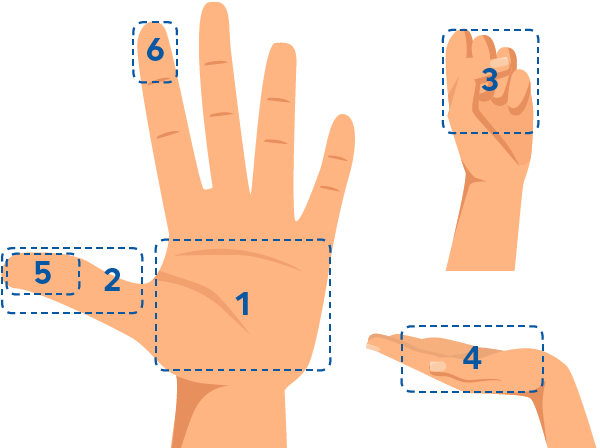
    At dinnertime, reduce the temptation to go back for seconds by keeping the serving bowls out of reach. And with this “handy” guide, you’ll always have a way to estimate portion size at your fingertips:

    A COMMON PROBLEM IS EATING AFTER DINNER WATCHING TV. TRY TO EXERCISE AFTER DINNER OR DRINK WATER TO AVOID EATING AFTER DINNER

    1. 3 ounces of meat, fish, or poultry
      Palm of hand (no fingers)
    2. 1 ounce of meat or cheese
      Thumb (tip to base)
    3. 1 cup or 1 medium fruit
      Fist
    4. 1–2 ounces of nuts or pretzels
      Cupped hand
    5. 1 tablespoon
      Thumb tip (tip to 1st joint)
    6. 1 teaspoon
      Fingertip (tip to 1st joint)

    You’ll want to plan for regular, balanced meals to avoid high or low blood sugarlevels. Eating about the same amount of carbs at each meal can be helpful. Counting carbs and using the plate method are two common tools that can make planning meals easier too.

    Counting Carbs

    Hand figure portion graphic palm of hand is 3 ounces of meat, fish, or poultry. thumb tip to base is 1 ounce of meat or cheese, fist is 1 cup or 1 medium piece of fruit, cupped hand is 1-2 ounces of nuts, thumb tip is 1 tablespoon, fingertip is 1 teaspoon

    THIS IS MORE APPLICABLE FOR PERSONS WITH DIABETES

    Keeping track of how many carbs you eat and setting a limit for each meal can help keep your blood sugar levels in your target range. Work with your doctor or a registered dietitian to find out how many carbs you can eat each day and at each meal, and then refer to this list of common foods that contain carbs and serving sizes. For more information, see Carb Counting

    Planning meals that fit your health needs, tastes, budget, and schedule can be complicated. Ask your doctor to refer you to diabetes self-management education and support (DSMES) services, where you’ll work with a diabetes educator to create a healthy meal plan just for you. You can also visit the Find a Diabetes Education Program in Your Area locator for DSMES services near you.

    Planning meals that fit your health needs, tastes, budget, and schedule can be complicated. Ask your doctor to refer you to diabetes self-management education and support (DSMES) services, where you’ll work with a diabetes educator to create a healthy meal plan just for you. You can also visit the Find a Diabetes Education Program in Your Area locator for DSMES services near you.

    Hand figure portion graphic palm of hand is 3 ounces of meat, fish, or poultry. thumb tip to base is 1 ounce of meat or cheese, fist is 1 cup or 1 medium piece of fruit, cupped hand is 1-2 ounces of nuts, thumb tip is 1 tablespoon, fingertip is 1 teaspoon
  • COUNT YOUR CALORIE NEEDS

    https://www.myplate.gov/widgets/myplate-plan-start
    THIS IS FROM US GOVERNMENT SITE
    PLEASE PRESS ON THE LINK TO REVIEW YOUR NEED FOR CALORIE INTAKE AND IT WILL TAKE YOU TO THAT WEBSITE
    
    IF YOU DO PLEASE RETURN TO OUR WEBSITE AS DRNIMS.COM
    
  • NUTRITION SECURITY

    Time to shift from ‘food security’ to ‘nutrition security’ to increase health and well-being

    Now, a new Viewpoint article argues that today’s health and equity challenges call for the U.S. to shift from “food insecurity” to “nutrition insecurity” in order to catalyze appropriate focus and policies on access not just to food but to healthy, nourishing food.
    The Viewpoint, by Dariush Mozaffarian of the Friedman School of Nutrition Science & Policy at Tufts University, Sheila Fleischhacker of Georgetown Law School, and José Andrés of World Central Kitchen, was published online in JAMAthis week.
    The concept of food security focuses on access to and affordability of food that is safe, nutritious, and consistent with personal preferences. In reality, however, the “nutritious” part often has been overlooked or lost in national policies and solutions, with resulting emphasis on quantity, rather than quality, of food, say the authors.
    “Food is essential both for life and human dignity. Every day, I see hunger, but the hunger I see is not only for calories but for nourishing meals. With a new focus on nutrition security, we embrace a solution that nourishes people, instead of filling them with food but leaving them hungry,” said Chef José Andrés, founder of World Central Kitchen.
    The authors define nutrition security as having consistent access to and availability and affordability of foods and beverages that promote well-being, while preventing — and, if needed, treating — disease. Nutrition security provides a more inclusive view that recognizes that foods must nourish all people.

  • PLANT BASED DIETS FOR THE PLANET

    Plant-Based for the Planet

    A report published in The Lancet in 2019 concluded that a dietary shift toward plant foods and away from animal products is vital for promoting the health of our planet.
    The report states that projections for the future show that “vegan and vegetarian diets were associated with the greatest reductions in greenhouse-gas emissions.”  
     A global shift to a plant-based diet could reduce mortality and greenhouse gases caused by food production by 10% and 70%, respectively, by 2050. 
    A report from the United Nations Environment Programme says that “animal products, both meat and dairy, in general require more resources and cause higher emissions than plant-based alternatives.” 
    The World Health Organization says, “Reducing livestock herds would also reduce emissions of methane, which is the second largest contributor to global warming after carbon dioxide.”
  • HEART DISEASE AND VEGETARIAN DIET

       Vegetarian Diets Reduce Risk of Death from Heart Disease Vegetarian diets reduce the risk of death from ischemic heart disease,
    according to a meta-analysis published in the American Journal of Preventive Cardiology. Researchers reviewed eight observational studies that compared vegetarian and nonvegetarian diets with mortalit
    y. Vegetarian diets, including vegan eating patterns, were associated with a 30% reduced risk of death from ischemic heart disease when compared to nonvegetarian diets.
    Vegetarian diets benefit risk factors for heart disease, including weight, cholesterol, and blood pressure levels. Vegetarian diets
    avoid animal products, which are often high in saturated fat, iron, and hormones. The authors recommend clinicians consider vegetarian diets as a cost-effective intervention for high-risk groups to reduce mortality from heart disease.
  • PLANT BASED FOODS WITH PROTEINS

    Meat, fish, poultry, and eggs are high-quality foods containing all the essential amino acids required by the body and approximately 7 grams of protein per ounce. Because of this, these are the first foods many think of when choosing what meets their daily protein needs.

    BUT, there are some plant-based proteins that shouldn’t be overlooked. Check out this list of top protein-rich plant foods that not only pack hefty doses of protein, but also contribute essential amino acids to your daily diet.

    Eating healthy should still be delicious.

    Sign up for our daily newsletter for more great articles and tasty, healthy recipes.SIGN UP 

    Sources with 12 to 18 grams per serving

    Lentils

    Lentils of various colors

    CREDIT: EGAL/GETTY IMAGES

    Nutrition stats (1 cup canned or cooked): 18g protein, 230 calories, 40g carb, 16g fiberADVERTISING

    Lentils are a tiny member of the legume family that also claims beans, peanuts, and soybeans. They are inexpensive and cook quickly because of their size, but they’re also packed with protein and fiber. Whether you choose red, yellow, green, black, or brown, lentils are a hearty plant-based substitute for meat. They shine in recipes like Lentil Shepherd’s Pie, as well as an easy way to boost protein in salads and grain bowls like Kale and Lentil Bowl with Thai Almond Sauce.

    Edamame

    edamame

    CREDIT: GETTY IMAGES

    Nutrition stats (1 cup canned or cooked): 17g protein, 190 calories, 16g carb, 8g fiber

    Firm with a slightly nutty flavor, edamame are young green soybeans that are served shelled or in pods. What’s important to know about edamame and other soy-based foods (like tofu) is that it’s one of very food plant foods considered a “complete protein,” meaning they contain all nine essential amino acids. Their creamy texture makes them ideal to puree as a part of a hummus, or for a sauce for something like Spaghetti Squash with Edamame-Cilantro Pesto. I’ve found it easiest to toss a frozen handful into grains, stir fries, and pasta dishes like this Soba-Edamame Noodle Bowl.

    Legume-Based or Protein-Fortified Pasta

    Soba-Edamame Noodle Bowl

    CREDIT: PHOTO: JENNIFER CAUSEY

    Nutrition stats (1 cup cooked chickpea-based): 16g protein, 220 calories, 37g carb, 9g fiber

    The dry pasta section of the grocery has more than doubled in size over the past few years, thanks in large part to new varieties that use chickpea or lentil-based flours, or flour blends featuring whole-grain and pea flours to boost protein. Pasta with Green Peas and Almond Gremolata and Creamy Four Cheese Pasta with Spinach are two protein-packed vegetarian dishes that use them, but you can substitute these pastas for regular spaghetti if you’d like to further boost protein and fiber.

    Lima Beans

    Lima Beans

    CREDIT: PHOTO: PAUL J. RICHARDS / GETTY

    Nutrition stats (1 cup canned or cooked); 12g protein, 190 calories, 35g carb, 9g fiber

    Lima beans are a staple in the South (where I live), and a legume that I never realized was such a great protein source until recently. In fact, they’re equivalent to canned and dried beans when it comes to protein and fiber. I love their creamy, starchy texture when served by themselves, but also when tossed in a salad made with grains, greens, or another legume. I’d recommend trying Succotash Salad with Lentils or Black Bean-Quinoa Salad with Basil-Lemon Dressing if you’re wanting to expand your lima bean wheelhouse.

    Black Beans

    Recipe Makeover: Black Beans

    CREDIT: PHOTO: RANDY MAYOR

    Nutrition stats (1 cup canned or cooked); 12g protein, 200 calories, 34g carb, 10g fiber

    Canned black beans are a staple I always have in my pantry because of their versatility. Whether extending a taco dish made with beef, tossing with tomatoes and avocado for a quick protein-packed bean salad, or using as a veggie burger base, these beans handle their assignment with aplomb. Because most other canned and dried beans—from kidney to chickpeas to cannellini—have approximately the same nutrient stats, though, don’t limit yourself to just black beans. Try serving up some Black Bean Burgers with Sriracha Aioli or Fava Beans with Pesto and Cavatappi.

    Sources with 6 to 8 grams per serving

    Peanut Butter

    Fancier Nut Butters Aren’t Necessarily Healthier Than Peanut Butter

    CREDIT: SANNY11/GETTY IMAGES

    Nutrition stats (2 Tbsp); 8g protein, 190 calories, 6g carb, 2g fiber

    Because peanuts are a legume, peanut butter boasts a little more protein when compared to nut butters made with tree nuts (think almonds). Add flavor and creaminess while boosting protein by incorporating it into sweet dishes like Peanut Butter, Flax, and Banana Smoothies, or savory ones like Zucchini Noodles with Spicy Peanut Sauce.

    Quinoa

    quinoa-grains.jpg

    CREDIT: GETTY IMAGES

    Nutrition stats (1 cup cooked): 8g protein, 220 calories, 39g carb, 5g fiber

    This whole grain cooks quick and its hearty texture allows it to serve as a base for grain pilafs and veggie burgers alike. It’s also considered a complete protein like edamame. Here are a few different ways to incorporate quinoa into your meals:

    • Buffalo Quinoa Burgers
    • Quinoa with Leeks and Shiitake Mushrooms
    • Tomato-Leek Pie with Quinoa Crust

    Green Peas

    1703w Green Peas

    CREDIT: PHOTO: ALLY T/ GETTY

    Nutrition stats (1 cup cooked): 8g protein, 130 calories, 23g carb, 7g fiber

    Peas are easy to overlook, and while they don’t contain as much protein as beans, they’re still a good source of both protein and fiber. Use either fresh or frozen to boost protein in recipes, like this Indian-Spiced Pea Frittata, or Pea Pappardelle Pasta.

    Almonds

    Why Raw Almonds Aren't Actually Raw

    CREDIT: PHOTO BY JUAN JOSÉ VALENCIA ANTÍA VIA UNSPLASH

    Nutrition stas (1 ounce, about 22 whole): 6g protein, 170 calories, 6g carb, 3g fiber

    Sure, they’re a great source of healthy fats, but almonds are also an easy, portable source of protein. Of course, you can also incorporate them into snacks like Cherry-Almond Energy Bars or entrees like Rigatoni with Green Olive-Almond Pesto and Asiago Cheese. Not an almond fan? Pistachios offer comparable protein.

    Honorable Mention

    There are also a few other produce protein sources that might surprise you. Even though they contain small amounts, these plants can help boost your daily intake.

    • Asparagus (12 cooked spears): 4g protein, 40 calories, 7g carb, 4g fiber
    • Avocado (1 whole): 4g protein, 320 calories, 17g carb, 13g fiber
    • Potato (1 medium cooked): 4g protein, 160 calories, 37g carb, 4g fiber
    • Corn (1 ear cooked): 4g protein, 120 calories, 27g carb, 4g fiber
    • Spinach (2/3 cup cooked): 4g protein, 30 calories, 5g carb, 3g fiber
  • VEGAN SOCIETY

    “Veganism is a philosophy and way of living which seeks to exclude—as far as is possible and practicable—all forms of exploitation of, and cruelty to, animals for food, clothing or any other purpose; and by extension, promotes the development and use of animal-free alternatives for the benefit of animals, humans and the environment. In dietary terms it denotes the practice of dispensing with all products derived wholly or partly from animals.”

    There are many ways to embrace vegan living. Yet one thing all vegans have in common is a plant-based diet avoiding all animal foods such as meat (including fish, shellfish and insects), dairy, eggs and honey – as well as avoiding animal-derived materials, products tested on animals and places that use animals for entertainment.

    History

    Although the vegan diet was defined early on in The Vegan Society’s beginnings in 1944, it was as late as 1949 before Leslie J Cross pointed out that the society lacked a definition of veganism. He suggested “[t]he principle of the emancipation of animals from exploitation by man”. This is later clarified as “to seek an end to the use of animals by man for food, commodities, work, hunting, vivisection, and by all other uses involving exploitation of animal life by man”.

    The society was first registered as a charity in August 1964 but its assets were later transferred to a new charity when it also became a limited company in December 1979. The definition of veganism and the charitable objects of the society were amended and refined over the years. By winter 1988 the current definition was in use – although the phrasing has changed slightly over the years.

    To read more on the history of veganism, see here.

    So what do vegans eat?

    A great deal – you’ll soon find a whole new world of exciting foods and flavours opening up to you. A vegan diet is richly diverse and comprises all kinds of fruits, vegetables, nuts, grains, seeds, beans and pulses – all of which can be prepared in endless combinations that will ensure you’re never bored. From curry to cake, pasties to pizzas, all your favourite things can be suitable for a vegan diet if they’re made with plant-based ingredients. Check out our vegan recipes for ideas.

    It’s not just about diet

    Vegans avoid exploiting animals for any purpose, with compassion being a key reason many choose a vegan lifestyle. From accessories and clothing to makeup and bathroom items, animal products and products tested on animals are found in more places than you might expect. Fortunately nowadays there are affordable and easily-sourced alternatives to just about everything. With over 49,000 products and services registered with our Vegan Trademark alone, living a vegan lifestyle has never been easier. Browse our online shop today.

    Other aspects of vegan living

    Medicine

    Currently all medicine in the UK must be tested on animals before it is deemed safe for human use, but please note: The Vegan Society DOES NOT recommend you avoid medication prescribed to you by your doctor – a dead vegan is no good to anyone! What you can do is ask your GP or pharmacist to provide you, if possible, with medication that does not contain animal products such as gelatine or lactose. For more information visit the website www.medicines.org.uk, which contains information on medicines prescribed in the UK, including ingredients lists.

    Medical charities

    If you’re a medical charity supporter you may wish to check whether your chosen charity performs tests on animals. There are many charities that don’t currently conduct animal tests and many vegans prefer donating to charities that actively seek alternative methods of testing.

    Entertainment

    Vegans choose not to support animal exploitation in any form and so avoid visiting zoos or aquariums, or taking part in dog or horse racing. A great alternative is visiting and supporting animal sanctuaries that provide safe and loving homes for rescued animals.

    Want to find out more about the vegan lifestyle? Sign up to the free Vegan Pledge today. There are hundreds of thousands of vegans across the globe – with you, we’re that much stronger.

    Go Vegan

    The Vegan Shop
  • LECTINS friend or foe

    Lectins

    www.medscape.com

    Lectins: Are These Food-Based Proteins Friend or Foe? A controversy

    John Watson; Reviewed by Anya Romanowski, MS, RD

    August 17, 2018

    The seemingly endless search for that one insidious element in our diets, which if eliminated, can restore our waistlines, health, and happiness has uncovered its latest culprit: lectins. If you have never heard of lectins, carbohydrate-binding glycoproteins found in many foods, prepare to get familiar with what some are deeming “the next gluten.”[1]

    And as with going gluten-free, there is a slew of information online and elsewhere about the lectin-free diet that experts say has at best a tangential relationship with the scientific evidence.

    What follows is a primer on this emerging dietary trend to help you understand whether lectins are friend, foe, or something entirely more interesting.

    An Unlikely Antagonist 

    Lectins are proteins that can be found in most living organisms, and were first discovered in the late 1880s. Certain lectins possess an inherent toxicity thought to have evolved as a natural deterrent to protect plants and animals from being eaten. It appears to be working, because several animal species have been shown to experience reduced intestinal absorption and resulting morbidity after ingesting lectins.[2] Essentially, lectin toxicity mirrors the effect of food poisoning, and serves as an evolutionary caution sign.

    But this is in no way true of all lectins, whose range is considerable. Most lectins are inactive with no biological activity, whereas others are thought to have health benefits, and some, such as ricin, can be a deadly poison upon consumption.[3]Putting them all under one umbrella is basically meaningless.

    The main case against lectins comes from their biological activity. Lectins strongly and specifically bind to sugars (carbohydrates). This affinity for sugars is captured in the word “lectin” itself, which is derived from the Latin word legere, or “to select.”[4] Lectins have been compared to keys that can unlock specific carbohydrates, which, in turn, can disrupt the cells in which they are housed and cause inflammation.[5]

    If you consume certain lectins and do not have the enzymes to properly digest them, they can pass through the digestive tract undisturbed, which has been linked to nutrient deficiencies, disrupted digestion, and severe intestinal damage.[6] There are also proposed risks if lectins enter the body’s circulation. Review articles based mostly on animal findings have posited that ingested lectins could increase intestinal permeability; get past the gut wall; and deposit themselves in distant organs, causing inflammatory conditions, such as rheumatoid arthritis and diabetes.[7,8]

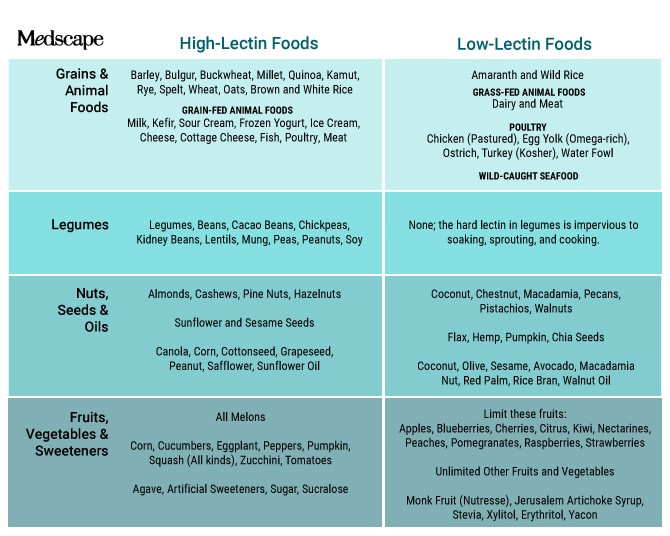
    Lectins’ new status as a public health hazard is an unlikely turn of events, because they are found in foods generally considered the staple of a healthy diet—whole grains, beans, peas, tomatoes, nuts, milk, and fruit, to name a few. Lectin-containing foods could double as the shopping list of a health fanatic (Figure). This makes the prospect of avoiding lectins somewhat dubious.

    Figure. High- and low-lectin foods.

    Debunking the Lectin-Free Diet 

    Unlike other dietary interventions with hard-to-pin-down origins, the lectin-free diet craze can be sourced to one person: Steven Gundry, MD, a California-based cardiologist and heart surgeon who attributes going lectin-free to his own improved health. Gundry has outlined what he sees as the hazards of lectins in the 2017 book The Plant Paradox: The Hidden Dangers in “Healthy” Foods That Cause Disease and Weight Gain. It advances Gundry’s thesis that the ingestion of lectins incites an inflammatory process that can cause weight gain and serious health conditions, such as autoimmune disease.

    Gundry has been pilloried by some for his alarmist language comparing ingested lectins to initiating chemical warfare on your body and for extending his influence into the commercial realm, offering a nutraceutical product called Lectin Shield on his website at nearly $80 a bottle. But the book is nonetheless a best seller, and his narrative about lectins is trickling down through various media outlets and vocal proponents.

    Critics argue that the trouble with this is that it doesn’t seem to be backed up with any convincing clinical research, and doesn’t even pass the test of basic logic. As many have pointed out, the global populations with the longest, healthiest lifespans avail themselves of diets rich in lectins, whereas the United States famously does not. They ask quite rightly, if lectins were truly the source of our dietary struggles, shouldn’t we be in better shape from avoiding them in relatively higher proportions than other societies?

    Again, it’s important to remember that lectins are far from monolithic and vary in qualities from food to food, from the benign to the toxic.[9] Furthermore, and quite crucially, they are rendered safe for consumption upon cooking. So if you find yourself with a hankering to eat raw kidney beans, you will probably experience some gastric distress; however, if you instead place those same beans in a pot and let it simmer, the prevailing science shows you will be at no risk. That’s because the toxic lectin content in raw red kidney beans drops by 99% after cooking them (from 20,000-70,000 to 200-400 hemagglutinating units).[3]

    It is this disconnect between common sense and hype that has led high-profile publications, such as The Atlantic [1] and the Washington Post,[10] to label the lectin-free diet as “pseudoscience” and promoting “insidious misinformation.”

    Getting Free of Fads 

    Going lectin-free appears poised for the life cycle of most dietary fads, with a surge in interest followed by an inevitable fall from grace, when it is supplanted by the next new thing. However, early reactions to lectin-free diets from dietitians and other experts have been fairly adamant that it is a baseless intervention,[1,10-12] which may go some way toward sapping the enthusiasm.

    What does enjoy a robust foundation of scientific evidence is the value of consuming a diet rich in fruits, vegetables, fiber, whole grains, and other beneficial foods. Taking these off our plate in pursuit of a diet that many consider a fad would likely lead to an actual health crisis.

    And in an interesting twist, the very same properties that are causing lectins to be removed from diets are also making them the source of intense clinical interest. To researchers in the emerging field of lectinology, a strongly binding protein with toxic qualities that can resist digestion, survive gut passage, and remain active within the body does not sound like a cause of fear, but instead something to harness. They are investigating possible uses for a therapeutic lectin compound for treating cancer, HIV, rheumatic heart disease, diabetes, ocular diseases, and more.[9,13,14]

    Although these efforts are still in the early stage, if they prove even moderately successful, the day may come when lectins are seen not as detriments to our health, but something that enabled us to fight back against some of the greatest threats to it.

    From the editor

    (

    References

    Follow Medscape on FacebookTwitter, and Instagram.

    1. Hamblin J. The next gluten. The Atlantic. April 24, 2017. Source Accessed August 8, 2018.
    2. Lampel KA, Al-Khaldian S, Cahill SM, eds. Bad Bug Book Handbook of Foodborne Pathogenic Microorganisms and Natural Toxins. Bethesda, MD: US Food and Drug Administration; 2012. Source Accessed August 8, 2018.
    3. These 50 foods are high in lectins: avoidance or not? Superfoodly. October 8, 2017. Source Accessed August 8, 2018.
    4. Stillwell W. An Introduction to Biological Membranes: Composition, Structure and Function. 2nd ed. Amsterdam, The Netherlands: Elsevier Science; 2016.
    5. Sullivan K. The lectin report. June 1, 2018. Source Accessed August 8, 2018.
    6. Vojdani A. Lectins, agglutinins, and their roles in autoimmune reactivities. Altern Ther Health Med. 2015;21 Suppl 1:46-51.
    7. Freed DL. Do dietary lectins cause disease? BMJ. 1999;318:1023-1024. Abstract
    8. De Punder K, Pruimboom L. The dietary intake of wheat and other cereal grains and their role in inflammation. Nutrients. 2013;5:771-787. Abstract
    9. Lam SK, Ng TB. Lectins: production and practical applications. Appl Microbiol Biotechnol. 2011;89:45-55. Abstract
    10. Rosenbloom C. Going ‘lectin-free’ is the latest pseudoscience diet fad. Washington Post. July 6, 2017. SourceAccessed August 8, 2018.
    11. Amidor T. Ask the expert: clearing up lectin misconceptions. Today’s Dietitian. October 2017. Source Accessed August 8, 2018.
    12. Ware M. Everything you need to know about the lectin-free diet. Medical News Today. October 3, 2017. SourceAccessed August 8, 2018.
    13. Coulibaly FS, Youan BB. Curre
  • HEART CALCIUM SCAN

    What is the heart calcium scan

    A heart scan, also known as a coronary calcium scan, is a specialized X-ray test that provides pictures of your heart that can help your doctor detect and measure calcium-containing plaque in the arteries.

    Plaque inside the arteries of your heart can grow and restrict blood flow to the muscles of the heart. Measuring calcified plaque with a heart scan may allow your doctor to identify possible coronary artery disease before you have signs and symptoms.

    Your doctor will use your test results to determine if you may need medication or lifestyle changes to reduce the risk of heart attack or other heart problems.

    Why it’s done

    Your doctor may order a heart scan to get a better understanding of your risk of heart disease or if your treatment plan is uncertain.

    A heart scan uses a specialized X-ray technology called multidetector row or multislice computerized tomography (CT), which creates multiple images of plaque deposits in the blood vessels. The imaging test provides an early look at levels of plaque.

    Plaque is made up of fats, cholesterol, calcium and other substances in the blood. It develops gradually over time, long before there are any signs or symptoms of disease. These deposits can restrict the flow of oxygen-rich blood to the muscles of the heart. Plaque also may burst, triggering a blood clot that can cause a heart attack.

    When is a heart scan used?

    A heart scan may help guide treatment if you have a low to moderate risk of heart disease or if your heart disease risk isn’t clear. Your doctor can tell you if you might benefit from having a heart scan based on your risk factors.

    A heart scan also may help motivate people at moderate risk to make important lifestyle changes and follow treatment plans.

    When is a heart scan not used?

    A heart scan requires exposure to radiation. While the exposure is generally considered safe, the scan isn’t recommended if the risk of radiation exposure outweighs any potential benefit.

    According to the American College of Cardiology and the American Heart Association guidelines, a heart scan may not be recommended for the following people:

    • Men under age 40 and women under age 50, because it’s unlikely calcium can be detected at younger ages
    • People who have a very low risk, because detectable calcium is highly unlikely if you don’t have a family history of heart attacks at an early age
    • People who already have a known high risk (especially heavy smokers or those with diabetes or very high cholesterol), because the heart scan will likely not provide any additional information to guide treatment
    • People with symptoms or a diagnosis of coronary artery disease, because the procedure won’t help doctors better understand the disease progression or risk
    • People who already had an abnormal coronary calcium heart scan

    information from the mayo clinic website