Sucrose, glucose, and fructose are three common types of sugar that are absorbed differently and have different effects on the body.
Sucrose, glucose, and fructose are three types of sugar that contain the same number of calories gram for gram. They’re all found naturally in fruits, vegetables, dairy products, and grains but are also added to many processed foods.
They differ in their chemical structures, the way your body digests and metabolizes it different
Glucose
Glucose is a simple sugar, or monosaccharide. It’s your body’s preferred carb-based energy source Monosaccharides are made up of one single unit of sugar and thus cannot be broken down into simpler compounds.
hey’re the building blocks of carbohydrates.
It’s often added to processed foods in the form of dextrose, which is extracted from corn or wheat.
Glucose is less sweet than both fructose and sucrose (2).
Sucrose is the scientific name for table sugar.
Sugars are categorized as monosaccharides or disaccharides. Disaccharides are made up of two linked monosaccharides and are broken back down into monosaccharides during digestion
Sucrose is a disaccharide consisting of one glucose molecule and one fructose molecule, or 50% glucose and 50% fructose. sucrose, or table sugar, organic compound, colourless sweet-tasting crystals that dissolve in water. Sucrose (C12H22O11) is a disaccharide; hydrolysis, by the enzyme invertase, yields “invert sugar” (so called because the hydrolysis results in an inversion of the rotation of plane polarized light), a 50:50 mixture of fructose and glucose, its two constituent monosaccharides.
Sucrose occurs naturally in sugarcane, sugar beets, sugar maple sap, dates, and honey. It is produced commercially in large amounts (especially from sugarcane and sugar beets) and is used almost entirely as food. it’s also added to many processed foods, such as candy, ice cream, breakfast cereals, canned foods, soda, and other sweetened beverages.
\
Sucrose tastes less sweet than fructose alone but sweeter than glucose alone (2).
FructoseFructose, or “fruit sugar,” is a monosaccharide like glucose .
It’s naturally found in fruit, honey, agave, and most root vegetables. Moreover, it’s commonly added to processed foods in the form of high fructose corn syrup.
Fructose is sourced from sugar cane, sugar beets, and corn. High -fructose corn syrup is made from cornstarch and contains more fructose than glucose, compared with regular corn syrup (3Trusted Source).
Of the three sugars, fructose has the sweetest taste but the least impact on your blood sugar
SUMMARY
Sucrose is made up of the simple sugars glucose and fructose. Sucrose, glucose, and fructose are found naturally in many foods but are also added to processed products.
They’re digested and absorbed differently
Your body digests and absorbs monosaccharides and disaccharides differently.
Since monosaccharides are already in their simplest form, they don’t need to be broken down before your body can use them. They’re absorbed directly into your bloodstream, primarily in your small intestine (5).
On the other hand, your body must break down disaccharides like sucrose into simple sugars before absorbing them.
Once the sugars are in their simplest form, they’re metabolized differently.
Glucose absorption and use
Glucose is absorbed directly across the lining of the small intestine into your bloodstream, which delivers it to your cells
It raises blood sugar more quickly than other sugars, which stimulates the release of insulin
Insulin is needed for glucose to enter your cells
Once inside your cells, glucose is either used immediately to create energy or turned into glycogen to be stored in your muscles or liver for future use
Your body tightly controls your blood sugar levels. When they get too low, glycogen is broken down into glucose and released into your blood to be used for energy
If glucose is unavailable, your liver can make this type of sugar from other fuel sources
Fructose absorption and use
Like glucose, fructose is absorbed directly into your bloodstream from the small intestine
It raises blood sugar levels more gradually than glucose and does not appear to immediately affect insulin levels
However, even though fructose doesn’t raise your blood sugar right away, it may have more long-term negative effects.
Your liver has to convert fructose into glucose before your body can use it for energy.
Eating large amounts of fructose on a high calorie diet can raise blood triglyceride levels
Excessive fructose intake may also raise the risk of metabolic syndrome and nonalcoholic fatty liver disease
Sucrose absorption and use
Enzymes in your mouth partially break down sucrose into glucose and fructose. However, the majority of sugar digestion happens in the small intestine (5).
The enzyme sucrase, which is made by the lining of your small intestine, splits sucrose into glucose and fructose. The glucose and fructose are then absorbed into your bloodstream as described above (15).
The presence of glucose increases the amount of fructose that is absorbed and also stimulates the release of insulin. Excessive absorption of fructose can promote the increased creation of fat stores in the liver
This means that eating fructose and glucose together may harm your health more than eating them separately (17).
It may explain why added sugars like high fructose corn syrup are linked to various health issues.
SUMMARY
Glucose and fructose are absorbed directly into your bloodstream, while sucrose must be broken down first. Glucose is used for energy or stored as glycogen. Fructose is converted to glucose or stored as fat.
Fructose in processed foods may be the worst for health
Your body converts fructose to glucose in the liver to use it for energy. Excess fructose from processed foods and beverages places a burden on your liver, which may lead to a series of metabolic problems
Naturally derived fructose from fruit sources is not associated with the same negative health outcomes. Fruit does not contain the same combination of glucose and fructose that the widely used artificial ingredient high fructose corn syrup does.
Additionally, the health benefits of eating fruit outweigh any potential negative effects of its natural fructose, given the high fiber content and vitamins, minerals, and antioxidants found in fruit
Fruit should be eaten as part of a balanced diet that also consists of whole grains, vegetables, lean proteins, and healthy fats. The 2020–2025 Dietary Guidelines for Americans recommend that adults eat 2–2.5 servings of fruit daily (20Trusted Source).
Several studies have demonstrated the harmful effects of high fructose corn syrup. These include insulin resistance, type 2 diabetes, obesity, fatty liver disease, and metabolic syndrome (
In one 10-week study, people who drank fructose-sweetened beverages had an 8.6% increase in belly fat, compared to 4.8% in those who drank glucose-sweetened drinks
Another study found that while all added sugars can increase your risk of type 2 diabetes and obesity, high fructose corn syrup may be the most harmful
What’s more, fructose has been shown to increase the hunger hormone ghrelin and may make you feel less full after eating
Since fructose is metabolized in your liver like alcohol, some evidence suggests that it may be similarly addictive. One study found that it activates the reward pathway in your brain, which may lead to increased sugar cravings
SUMMARY
Fructose in processed foods and beverages has been linked to several negative health effects, including obesity, type 2 diabetes, insulin resistance, and fatty liver disease. Consuming fructose may also increase feelings of hunger and sugar cravings.
Fructose, the sweetest tasting carbohydrate (CHO), is consumed in significant amounts in the human diet. It occurs naturally in fresh fruits, vegetables and honey, with its traditional consumption ranging between 16 and 20 g/day. However, over the past 40 years, the intake of processed foods and beverages that are sweetened with High Fructose Corn Syrup (HFCS) or sucrose has escalated dramatically, resulting in significant increases in dietary fructose intake, to levels reaching as high as 85–100 g/day [1]. Temporal trend investigations have suggested parallel increasing trends in the prevalence of obesity, type 2 diabetes and cardiovascular diseases around the globe [2,3,4,5]. It was postulated that the metabolism of dietary fructose increases the risk of the metabolic syndrome (MetS) [2, 6], a constellation of cardiometabolic risk factors including insulin resistance, elevated blood pressure (BP), impaired glucose tolerance, hyperglycemia, atherogenic dyslipidemia (hypertriglyceridemia coupled with low high-density lipoprotein cholesterol (HDL-C) levels) and central adiposity [7, 8]. In turn, the MetS increases the risk for developing type 2 diabetes, cardiovascular diseases and all-cause mortality [9, 10]. A longitudinal study of 2902 adults followed for 11 years, showed that participants with the MetS had an adjusted relative risk for type 2 diabetes of 10.3 (5.44–19.5) and for cardiovascular diseases of 2.13 (1.43–3.18) [11].
Animal experiments and human clinical studies have investigated some of the mechanistic links between high fructose intake and the MetS, and suggested that excessive fructose intake may activate lipogenesis, induce insulin resistance and increase the risk of hypertension [12,13,14,15,16,17,18,19,20]. Fructose metabolism may also stimulate uric acid production leading to hyperuricemia [21], an independent risk factor for many pathological conditions, including the MetS [22]. However, in many instances, these studies have been criticized for using unrealistically high amounts of pure fructose [17, 23, 24]. Evidence from epidemiological studies that investigated current amounts of dietary fructose consumption and their association with the MetS are scarce and have produced controversial findings [25,26,27,28]. Indeed, an analysis of the National Health and Nutrition Examination Survey (NHANES) 1999–2006 database indicated that fructose ordinary consumption in the American diet was not positively associated with indicators of MetS [25]. On the other hand, other epidemiological studies have indicated a positive association of fructose consumption with cardiometabolic abnormalities [27, 28]. In some other studies, the association between fructose intake and cardiometabolic risk factors lost significance when the analysis was adjusted for body weight [29], suggesting that obesity may be responsible for the development of these cardiometabolic factors rather than fructose intake. For instance, an analysis of healthy male adults (n = 40,389) from the longitudinal Health Professionals Follow-Up Study, showed that the significant association between sugar-sweetened beverage (SSB) consumption and type 2 diabetes lost its significance after adjustment for confounders, which included body mass index (BMI) [29, 30]. The discrepancy in findings may also result from the fact that many of the available epidemiological studies have assessed the association between MetS and total fructose intake, without any differentiation between naturally occurring vs. added fructose intakes. Dietary sources of naturally occurring fructose include fruits and vegetables that are rich in antioxidants, phytochemicals, fiber, minerals and vitamins, and which are individually and synergistically beneficial to cardiometabolic health [1, 25]. In contrast, the sources of added fructose are mostly high sugar, energy-dense processed foods that were linked to increased cardiometabolic risk [1, 14, 25].
The controversy in the available findings highlights the need for more research examining dietary fructose intake as a cardiometabolic risk factor in epidemiological settings, while also distinguishing between naturally occurring vs. added fructose intakes. To date, the association between dietary fructose and the MetS has not been investigated in the Arab Eastern Mediterranean Region (EMR), a region that is witnessing the nutrition transition with its characteristic shifts in diet, lifestyle and body composition [31]. The region harbors one of the highest rates of obesity and the MetS worldwide [32], while also witnessing significant increases in sugar intakes [33]. Lebanon, a small country of the EMR, is no exception with earlier studies reporting a high prevalence of the MetS (34.7%) [34] in the adult population, while data on dietary fructose intake are completely lacking. It is in this context that this study was conducted with the aim of (1) assessing total dietary fructose intake in a sample of Lebanese healthy adults, and determining the intake levels of natural vs. added fructose; (2) investigating the association of dietary fructose with the MetS in the study population; and (3) identifying the socioeconomic and lifestyle factors associated with high fructose intake.

You should limit your added sugar intake
There is no need to avoid sugars that are naturally found in whole foods, such as fruits, vegetables, and dairy products. These foods also contain nutrients, fiber, and water, which counter any of their negative effects.
The harmful health effects associated with sugar consumption are due to the high amount of added sugar in the typical Western diet.
A survey of over 30,000 Americans found that the average person consumed 68 grams of added sugars per day, or approximately 13% of their total calories — far more than the daily recommendation
The World Health Organization (WHO) recommends limiting added sugars to 5–10% of your daily calorie consumption. In other words, if you’re eating 2,000 calories per day, keep added sugars to less than 25–50 grams .
To put that into perspective, one 12-ounce (355 ml) can of soda contains nearly 40 grams of added sugar, which is enough to push you over your daily limit
Sugars are not only added to foods that are obviously sweet like sodas, ice cream, and candy. They are also added to foods you wouldn’t necessarily expect, such as condiments, sauces, and frozen foods.
When buying processed foods, always read the ingredient list carefully to look for hidden sugars. Keep in mind that sugar can be listed by over 50 different names.
The most effective way to reduce your sugar intake is to eat mostly whole and unprocessed foods.
SUMMARY
Added sugars should be limited, but there is no need to worry about those found naturally in foods. Consuming a diet high in whole foods and low in processed foods is the best way to avoid added sugars.
The bottom line
Glucose and fructose are simple sugars, or monosaccharides.
Your body can absorb them more easily than the disaccharide sucrose, which must be broken down first.
Added fructose may have the most negative health effects, but experts agree that you should limit your intake of all types of added sugar.
However, there is no need to limit the sugars found naturally in fruits and vegetables.
To ensure a healthy diet, eat whole foods whenever possible and save added sugars for the occasional special
Fructose, the sweetest tasting carbohydrate (CHO), is consumed in significant amounts in the human diet. It occurs naturally in fresh fruits, vegetables and honey, with its traditional consumption ranging between 16 and 20 g/day. However, over the past 40 years, the intake of processed foods and beverages that are sweetened with High Fructose Corn Syrup (HFCS) or sucrose has escalated dramatically, resulting in significant increases in dietary fructose intake, to levels reaching as high as 85–100 g/day [1]. Temporal trend investigations have suggested parallel increasing trends in the prevalence of obesity, type 2 diabetes and cardiovascular diseases around the globe [2,3,4,5]. It was postulated that the metabolism of dietary fructose increases the risk of the metabolic syndrome (MetS) [2, 6], a constellation of cardiometabolic risk factors including insulin resistance, elevated blood pressure (BP), impaired glucose tolerance, hyperglycemia, atherogenic dyslipidemia (hypertriglyceridemia coupled with low high-density lipoprotein cholesterol (HDL-C) levels) and central adiposity [7, 8]. In turn, the MetS increases the risk for developing type 2 diabetes, cardiovascular diseases and all-cause mortality [9, 10]. A longitudinal study of 2902 adults followed for 11 years, showed that participants with the MetS had an adjusted relative risk for type 2 diabetes of 10.3 (5.44–19.5) and for cardiovascular diseases of 2.13 (1.43–3.18) [11].
Animal experiments and human clinical studies have investigated some of the mechanistic links between high fructose intake and the MetS, and suggested that excessive fructose intake may activate lipogenesis, induce insulin resistance and increase the risk of hypertension [12,13,14,15,16,17,18,19,20]. Fructose metabolism may also stimulate uric acid production leading to hyperuricemia [21], an independent risk factor for many pathological conditions, including the MetS [22]. However, in many instances, these studies have been criticized for using unrealistically high amounts of pure fructose [17, 23, 24]. Evidence from epidemiological studies that investigated current amounts of dietary fructose consumption and their association with the MetS are scarce and have produced controversial findings [25,26,27,28]. Indeed, an analysis of the National Health and Nutrition Examination Survey (NHANES) 1999–2006 database indicated that fructose ordinary consumption in the American diet was not positively associated with indicators of MetS [25]. On the other hand, other epidemiological studies have indicated a positive association of fructose consumption with cardiometabolic abnormalities [27, 28]. In some other studies, the association between fructose intake and cardiometabolic risk factors lost significance when the analysis was adjusted for body weight [29], suggesting that obesity may be responsible for the development of these cardiometabolic factors rather than fructose intake. For instance, an analysis of healthy male adults (n = 40,389) from the longitudinal Health Professionals Follow-Up Study, showed that the significant association between sugar-sweetened beverage (SSB) consumption and type 2 diabetes lost its significance after adjustment for confounders, which included body mass index (BMI) [29, 30]. The discrepancy in findings may also result from the fact that many of the available epidemiological studies have assessed the association between MetS and total fructose intake, without any differentiation between naturally occurring vs. added fructose intakes. Dietary sources of naturally occurring fructose include fruits and vegetables that are rich in antioxidants, phytochemicals, fiber, minerals and vitamins, and which are individually and synergistically beneficial to cardiometabolic health [1, 25]. In contrast, the sources of added fructose are mostly high sugar, energy-dense processed foods that were linked to increased cardiometabolic risk [1, 14, 25].
The controversy in the available findings highlights the need for more research examining dietary fructose intake as a cardiometabolic risk factor in epidemiological settings, while also distinguishing between naturally occurring vs. added fructose intakes. To date, the association between dietary fructose and the MetS has not been investigated in the Arab Eastern Mediterranean Region (EMR), a region that is witnessing the nutrition transition with its characteristic shifts in diet, lifestyle and body composition [31]. The region harbors one of the highest rates of obesity and the MetS worldwide [32], while also witnessing significant increases in sugar intakes [33]. Lebanon, a small country of the EMR, is no exception with earlier studies reporting a high prevalence of the MetS (34.7%) [34] in the adult population, while data on dietary fructose intake are completely lacking. It is in this context that this study was conducted with the aim of (1) assessing total dietary fructose intake in a sample of Lebanese healthy adults, and determining the intake levels of natural vs. added fructose; (2) investigating the association of dietary fructose with the MetS in the study population; and (3) identifying the socioeconomic and lifestyle factors associated with high fructose intake.
Allulose: What to Know About This Sugar Alternative
3 min read
What Is Allulose?
Allulose is a rare sugar that naturally occurs in fruits like figs and raisins. “It’s about 70% as sweet as sugar,” s
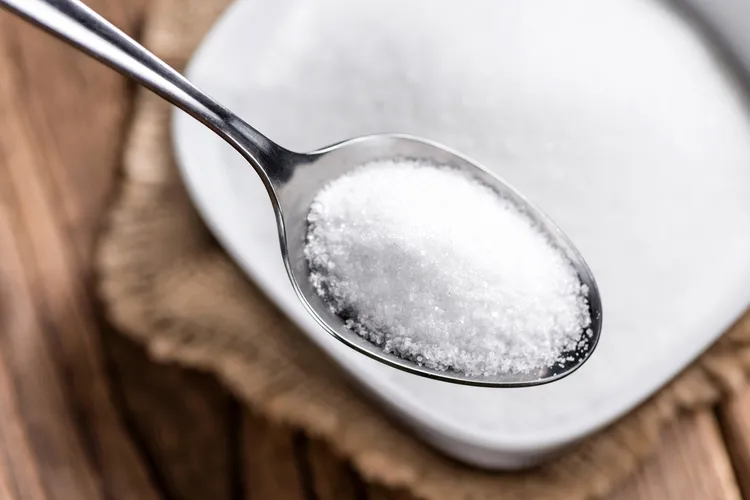
Basic sugar (called sucrose) is the most well-known form of sweetener. But there are many other types of sugar that are in or added to foods. There are simple sugars, called monosaccharides, which contain a single sugar molecule. These include glucose, fructose, galactose, ribose, and xylose. And then there are disaccharides, which are two sugar molecules bonded together, like sucrose, lactose, and maltose.
Allulose is a monosaccharide. It has 90% fewer calories than sucrose, which makes it virtually calorie-free. Researchers have recently found ways to produce allulose on a larger scale, which may allow it to become a popular sweetener in the future.
Is Allulose Healthy?
The FDA states that allulose is “generally recognized as safe” (GRAS).
“Basically, they know that small amounts aren’t going to do any harm to people if they consume it,” DiMarino says. “What I recommend with my patients is that whatever you’re using, whether it’s natural sugar … or any artificial sweetener, is that you use your best judgment and use it in small amounts in moderation. Because we don’t want to rely on them too much.”
If you follow these suggestions, allulose can be a great replacement to regular sugar.
“What’s interesting is that it’s not metabolized by the body. It’s absorbed by the small intestine, but then actually excreted. So none of the calories get absorbed or stored in your body,” DiMarino says. “With the limited research that’s been done, it’s been found that [allulose] doesn’t have effects on blood sugars or an insulin response.”
Does Allulose Cause Any Side Effects?
Most people who eat allulose in moderation won’t notice any major issues. But it’s important to note that everyone has a different tolerance to artificial sweeteners. “One side effect that people tend to see is some gastrointestinal discomfort, like maybe some bloating, or some issues going to the bathroom,” DiMarino says.
For that reason, it’s a good idea to add small amounts of allulose to your food at first.
“It’s more so trial and error in finding how much is your limit,” DiMarino says. “But if you eat it in small amounts over the period of the day, or just sparingly throughout the week, you shouldn’t end up having any kind of side effects.”
Who Should Use Allulose?
Allulose can be a good substitute if you want to cut back on the amount of sugar or overall calories you eat. You can use it to make baked goods, frozen desserts, or your favorite drink.
Since the sweetener has an extremely low sugar content, people on the ketogenic or “keto” diet have started to use allulose more. People who are on the keto diet eat very few carbohydrates. Allulose doesn’t have many, so it may be a good choice for keto-friendly sweets.
Allulose also doesn’t affect your blood sugar or insulin levels. So it may be agood alternative for people with certain conditions like diabetes.
“The two groups of people I feel like this would be most beneficial for would be people with diabetes, especially those who are trying to reduce their blood sugar. And people who are overweight or obese and trying to cut back on calories,” DiMarino says.
Who Shouldn’t Eat Allulose?
If you’re allergic to any artificial or alternative sweetener, you should stay away from allulose. But allergies to these sweeteners aren’t very common.
Experts are still studying how constant use of artificial or alternative sweeteners affect humans.
Some studies have linked the use of certain sugar substitutes with an increased risk for cancer and/or obesity. Most of these studies have been done on animals. It’s not known if they would have the same effect on people.
Most importantly, DiMarino suggests eating a balanced diet.
“Try and eat whole, high-quality foods that are minimally processed and that are lower in sugar. Use these alternatives and these sugar alcohols sparingly, in moderation,” DiMarino says
 A KSHAMICAMD WEBSITE