a rEview of Amla
Phyllanthus emblica – (Nelli/ Sri Lankan Gooseberry / Amla)
Amla has its origins in the Hindi word for the amla fruit tree, which means “sour.” The tree, now known by its Latin names Emblica officinalis and Phyllanthus emblica, grows throughout India and Sri Lanka and bears sour-tasting fruits. In Sanskrit, Amla is called “Amalaki.” Other Sanskrit nicknames describe amla as “mother,” “nurse,” and “immortality” — all of which are a testament to its healing and nurturing qualities.
| Crop Group | Fruits |
|---|---|
| Family Name | Euphorbiaceae |
| Plant Code | 042600 |
| Name in English | Amla |
| Name in Sinhala | Nelli |
The tree is small to medium in size, reaching 1–8 m (3 ft 3 in–26 ft 3 in) in height. The branchlets are not glabrous or finely pubescent, 10–20 cm (3.9–7.9 in) long, usually deciduous; the leaves are simple, subsessile and closely set along branchlets, light green, resembling pinnate leaves. The flowers are greenish-yellow. The fruit is nearly spherical, light greenish yellow, quite smooth and hard on appearance, with six vertical stripes or furrows. Ripening in autumn, the berries are harvested by hand after climbing to upper branches bearing the fruits. The taste of Indian emblic is sour, bitter and astringent, and it is quite fibrous. In India, it is common to eat emblic steeped in salt water and red chilli powder to make the sour fruits palatable
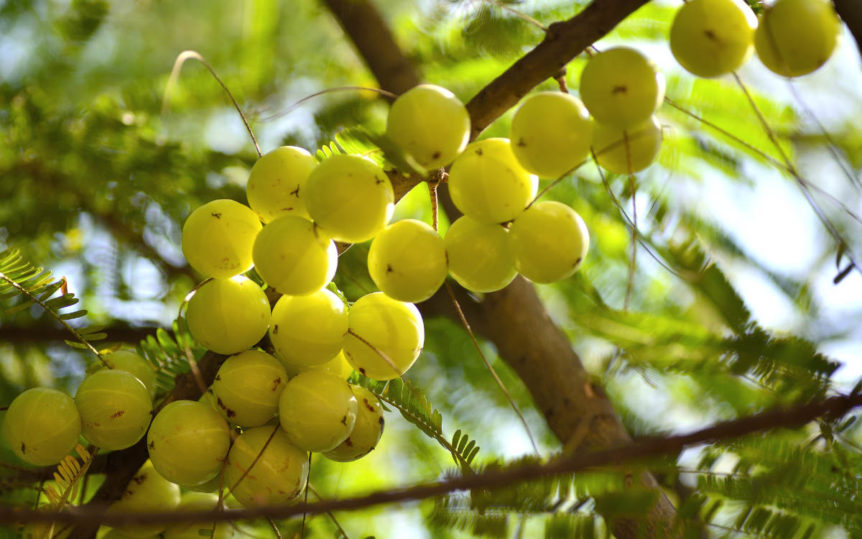

The tree is considered sacred by Hindus as God Vishnu is believed to dwell in it. The tree is worshiped on Amalaka Ekadashi. In other Hindu beliefs, amla is said to have originated from the drops of Amrit which spilled on earth accidentally, because of the fight of gods and demons after ksheera sagar manthan. This religious belief makes claims that it almost cures every disease and is also good in extending the longevity of life.
CHEMICAL COMPOSITION OF AMLA
| Component | Content (per 100 g) |
| Carbohydrate | 10 g |
| Protein | 0.80 g |
| Fat | 0.50 g |
| Total calories | 44 Kcal |
| Fiber | 4.3 g |
| Magnesium | 10 mg |
| Calcium | 25 mg |
| Iron | 0.31 mg |
| Potassium | 198 mg |
| Zinc | 0.12 mg |
Some recent clinical studies:
Modern science has shown amla to have hypoglycemic, anti-inflammatory, anti–hyperglycemic, anti-hyperlipidemic, and antioxidant properties in animal and human studies [6–8]. These properties may be due to the amla fruit containing high levels of vitamin C, tannins, polyphenols, fibers,minerals, proteins, and amino acids [4,9]. Standardized amla formulation usually contains the complex tannins and ellagitannins such as
corilagin, geraniin, chebulagic acid, and elaeocarpusin, etc., which arethe most active components and have high antioxidant activity [9].Apart from the useful antioxidant activity,
they have anti-thrombosis properties to promote vascular health by improve blood fluidity,\anti-coagulant, and antiplatelet activity, which can cause a warmingsensation. Amla also supports natural immunity and digestive functions.It is not completely understood, which amla components are responsiblefor each activity and they may be mediated through multiple differentmechanisms [3,10–12]. The combined anti-inflammatory, anti-th-rombosis, anti-coagulant, and anti-platelet activities of amla make it anattractive target for the prevention of a variety of vascular disorders [13,14].Further, there is limited evidence to support the longevity-promoting properties
The Amla formulation showed a significant improvement in endothelial function
as well as a reduction in biomarkers of oxidative stress. Also, the results
suggest that amla intake may increase plasma antioxidant potential and
decrease oxidative stress, which can help promote oxidative homeo-
stasis. All of these benefits are possible without influencing hepatic or
renal function, or diabetic indices in healthy humans. Lastly, the results
from this human clinical study conclusively established that amla has an
acceptable sensory and safety profile while providing enormous poten-
tial for the management of a healthy lifestyle.
linical evaluation of Emblica Officinalis Gatertn (Amla) in healthy human
subjects: Health benefits and safety results from a randomized,
double-blind, crossover placebo-controlled study
Mahendra Parkash Kapoor a,*, Koji Suzuki b,c, Timm Derek d, Makoto Ozeki a, Tsutomu Okubo a
a Taiyo Kagaku Co. Ltd., Nutrition Division, 1-3 Takaramachi, Yokkaichi, Mie, 510-0844, Japan
b Department of Molecular Pathobiology, Mie University, 2-174 Edobashi, Tsu City, Mie, 514 8507, Japan
c Suzuka University of Medical Sciences, Suzuka City, Mie, 510-0221, Japan
d Taiyo International Inc., Minneapolis, Minnesota, 55416, USA
The preventive efficacies and safety of Emblica Officinalis Gatertn (Amla), a most important and extensively
studied plant in the traditional Indian Ayurvedic system of medicine, are presented. Eligible healthy adult
subjects (n ¼ 15) were randomized to receive either amla or placebo (500 mg per day) during an 18-week study.
The efficacy parameters evaluated were the vascular function, blood hematology, oxidative and inflammatory
biomarkers, glucose and lipid profiles, urinalysis, and liver hepatotoxicity. The amla intake showed significant
improvements in the primary efficacy parameter of blood fluidity. There were also improvements in the sec-
ondary endpoints including lowering of von Willebrand factor (vWF), reduced 8-hydroxy-20 -deoxyguanosine (8-OHdG) as well as thrombin (TM) biomarkers of oxidative stress along with a significant improvement in HDL-cholesterol and lowering the LDL-cholesterol levels. No substantial changes were observed in liver hepatotox-icity, urinalysis, and hematology after consumption of amla compared to baseline or placebo. In addition, noadverse events, changes safety parameters or tolerance issues were observed after consumption of amla. Inconclusion, amla supplementation showed acceptable palatability, improved endothelial functions and reduced oxidative stresss
.
Historic Use of Amla for Immunity
Adhiyaman, a princely figure in Tamil literature known for his generosity, is said to have given a rare gooseberry imbued with the power to grant longevity to the great poet Avvaiyar, to promote literature. Sushruta (7th century BCE), India’s father of ancient medicine, also wrote of amla’s invigorating health benefits. Since the earliest days of healing, the fruit has been a staple of Ayurvedic healthcare. Today, it is studied by medical researchers for its healing properties, and especially for its unique support of the immune system.
Yes, according to studies published in the U.S. National Library of Medicine, amla has immunomodulatory effects. The effects are found to be due to its antioxidant properties, which not only help support immunity, but create an anti-apoptotic effect that protects against cell damage and oxidative stress.
While western science shows that amla’s health benefits derive from the plant’s rich stores of antioxidants and Vitamin C, Ayurvedic practitioners use the plant’s entire complex of entwined nutrients for immune support and beyond. In Ayurveda, amla is an exceptionally important rejuvenating fruit used to support blood, bones, liver, and heart health, as well as imbalances of one’s particular dosha that contribute to such issues. Amla is commonly used to increase the Ojas, which is one of the three vital essences that join to promote vitality, clarity, and overall health.
THE ScieNCE OF Amla for Immune System Support
In the science of immunology, the immune system is divided into a two major categories. Innate immunity is the first line of defense that protects the body from the outside world, including physical barriers and non-specific immune cells. Examples include the skin; mucous linings of nose, mouth, sinuses, digestive tract; perspiration and tears, and cells that come to the site of infection, disease, and invasion as they create a barrier to further intrusion into tissues and other cells.
Humoral immunity is also called adaptive immunity and is activated when a foreign pathogen or antigen gets past innate immune barriers. The adaptive immune system includes specialized, systemic cells and processes that eliminate pathogens by preventing their growth.
Amla’s Vitamin C Content
Vitamin C is the predominant vitamin complex of amla, with the fruit pulp containing 20 times more Vitamin C content than an orange. The Vitamin C complex and its cofactors (helper nutrients) that are innate within fruits, vegetables, and berries, work together to provide innate immunity. Vitamin C protects cell linings, which, at least in part, explains how amla supports the integrity and function of all the cells, tissues, and organs involved in the immune system. When the cellular linings of the lungs are strong, for example, the intake of healing oxygen is robust, and the toxic substances can be breathed out of the body.
Amla provides the nutrients that, according to scientific research, support cellular functions of the entire immune system: Vitamin C supports the skin to protect against oxidative stress (the loss of oxygen due to oxygen-robbing free radical molecules from environmental toxins, artificial food ingredients, and natural bodily metabolism). Vitamin C enables phagocytic cells to ingest and destroy foreign particles, bacteria, and cell debris). And, Vitamin C and its helper nutrients are needed for apoptosis, which is the natural death of cells, as well as the removal of these cells. Clearly, Vitamin C deficiency leads to impaired immunity and higher susceptibility to infections.
Amla – Ayurveda VIEW – ADAPTOGEN FOR THE DOSHAS (STRESS REDUCTION)
As a whole, integrated plant, amla is an Ayurvedic gem. Jagdev Singh, Ayurvedic herbalist, wrote that, besides vitamin C, the fruit is also a rich source of polyphenols that possess antioxidant properties. This combination of Vitamin C and polyphenols help fight oxidative stress (cell damage from loss of oxygen), modulate the immune system, and keep diseases and disorders at bay.
Because Ayurveda takes a holistic approach to healthcare that involves the mind, body, emotions, and spirit, amla defends against illness by addressing issues such as anxiety, depression, agitation, insomnia, and irritability. The Vitamin C content of amla also supports the adrenal glands, which are needed to face stress — especially the kind that is connected to trauma and the fight-or-flight reaction in the face of immediate or chronic threats, whether physical or emotional in nature. Because the adrenal glands are involved in energy production and require Vitamin C for healthy function, having adequate energy levels are needed to ward off disease and meet the stressors of day-to-day life.
Adaptogens are generally regarded for their impressive ability to reduce stress, but they are capable of far more. Although amla benefits all three doshas (body types) — Pitta, Kapha, Vata — Ayurvedic practitioners use the plant as a potent adaptogen, or Rasayana for Pitta types.
Researchers for the Women in Balance Institute explain that adaptogenic herbs work on the physical, mental, and emotional states of the body. Adaptogens work because they have an affinity for the entire body, not just one of its systems. They provide the vitamins, minerals, and phytochemicals the body needs to adapt to its ever-challenging environment, but they also offer natural synchronistic nutrients and energies that are not reproducible by science and are needed for health, healing, and recovery from illness. Among fruits and vegetables, amla is a powerhouse of healing and prevention, which is why Ayurvedic doctors have been recommending it for thousands of years
AMLA AND LIPIDS
According a study The Amla extract has shown significant potential in reducing. cholesterol and and triglyceride levels as well as lipid ratios, AIP and apoB/apo A-I in dyslipidemic persons and thus has scope to treat general as well as diabetic lipid abnormalities. A single agent to reduce cholesterol as well as TG is rare. Cholesterol reduction is achieved without concomitant reduction of Co Q10, in contrast to what is observed with statins.
Upadya H, Prabhu S, Prasad A, Subramanian D, Gupta S, Goel A. A randomized, double blind, placebo controlled, multicenter clinical trial to assess the efficacy and safety of Emblica officinalis extract in patients with dyslipidemia. BMC Complement Altern Med. 2019 Jan 22;19(1):27. doi: 10.1186/s12906-019-2430-y. PMID: 30670010; PMCID: PMC6341673.
AMLA AND OXIDATIVE FUNCTION
Clinical evaluation of Emblica Officinalis Gatertn (Amla) in healthy human subjects: Health benefits and safety results from a randomized, double-blind, crossover placebo-controlled study
Crossref DOI link: https://doi.org/10.1016/j.conctc.2019.100499
Published Print: 2020-03
The results suggest that amla intake may increase plasma antioxidant potential and
decrease oxidative stress, The amla formulation showed a significant improvement in endothelial function
as well as a reduction in biomarkers of oxidative stress. can help promote oxidative homeo-
stasis. All of these benefits are possible without influencing hepatic or
renal function, or diabetic indices in healthy humans. AMLAshowed a significant improvement in endothelial functionas well as a reduction in biomarkers of oxidative stressLastly, the results
from this human clinical study conclusively established that amla has an
acceptable sensory and safety profile while providing enormous poten-
tial for the management of a healthy lifestyle.
Beautiful Skin
Amla oil is used for a long-time as a home remedy to enhance the growth of the hair. Better hair growth can be achieved when a mixture of coconut oil and Amla is regularly used for hair massage. Amla oil can stimulate follicles of hair for their better growth. The length and volume of hair get improved when treated using Amla oil. It contains vitamin C, which helps increase collagen levels. This directly impacts the growth of new hairs by replacing dead hair cells on the scalp. Amla not only helps in growing the hairs but also prevents dandruff problems by hydrating the scalp. Vitamin C, due to its strong anti-inflammatory and anti-bacterial, prevents hair from itching and scaling. Ayurveda says the reason behind premature greying is due to excessive pitta. Therefore, Amla helps to reduce the pitta to retard the process of hair greying. This is the reason Amal is found in different hair colourant formulations.
As the largest organ in your body, your skin is in a constant state of turnover. Old cells die and are periodically replaced by new cells. The quality of the new cells depends not only on the creams and serums used topically but also on the internal health of the person. Proper skin care is vital to physical appearance. Unhealthy skin appears dull, wrinkly, and blotchy, whereas healthy skin appears luminous and vibrant.
Wrinkles develop with more ease and sink deeper when your skin is dehydrated and unhealthy.
Researchers widely acknowledge collagen loss as one of the main causes of aging. As we grow older, collagen synthesis decreases leading to premature wrinkling and reduced elasticity in the skin. AMLA has been proven to boost the synthesis of collagen, a protein that protects the skin against disease and injury by elevating the activity of the mitochondria (the energy producers of our body’s cells) in the skin fibroblasts that synthesize collagen. Another of AMLA’s anti-aging properties is its photoprotective effect against sun damage. UVB rays are known as the most hazardous environmental carcinogen. Amla effectively inhibits UVB-induced photoaging in human skin fibroblasts because of its strong ability to neutralize free radicals. A 2015 study from the University of Florence, Italy, found that Amla also improved the skin of patients by lowering inflammation.
At the molecular level, skin cells have an outer membrane composed mostly of lipid cells (fat). Because of this, fat soluble skin products penetrate the skin and can be absorbed better than water soluble products. Nevertheless, since both can be absorbed, it is important that your skin care products contain both water-soluble and fat-soluble extracts.
Anti-inflammatory Properties
Inflammation is a critical marker of human health. In addition to its other remarkable properties, Amla is widely accepted as a potent anti-inflammatory agent. Studies show decreases in blood C-Reactive Protein (CRP) levels after intake of AMLA by as much as 40% within six months. In a 2013 study published in the British Journal of Nutrition, researchers found that oral administration of the Amla fruit extract significantly decreased the concentrations of pro-inflammatory cytokines, TNF-α and IL-6 in serum, suggesting the anti-inflammatory power of AMLA. The pills are contraindicated during pregnancy.
Cardio-protective and Anti-Diabetic Properties
Cardiovascular health is a primary concern for our generation. A 2015 American study from the Ohio State University suggests that Amla supplementation provides beneficial effects in overweight/Class-1 obese adults by lowering multiple global cardiovascular disease risk factors. A 2015 study from the University of Connecticut shows that Amla increases production of nitric oxide, glutathione, and high-density lipoprotein (HDL); decreases low-density lipoprotein (LDL), total cholesterol, triglycerides, and high-sensitivity C-reactive protein (hsCRP); and significantly inhibits platelet aggregation. In their study on rats, they found that Amla is capable of preserving cardiac tissue during ischemia-reperfusion injury. In a double-blind, placebo-controlled study from India, Amla extract produced a significant decrease in mean percent change in the indices of arterial stiff- ness and increase in SEVR, an index of myocardial perfusion with Cold Pressor Testing. In another double-blind, placebo-controlled study from India,
Amla significantly improved endothelial function and reduced biomarkers of oxidative stress and systemic inflammation in patients with type 2 diabetes mellitus which is affected adversely in patient with diabetes
Traditionally, Amla is used as a home remedy to regulate or control blood sugar. One reason behind diabetes is stress conditions. Amla is a good source of vitamin C. It is a powerful antioxidant that will help reverse the free radical generation and the effect of oxidative stress. In another mechanism, Amla’s fibres may help reduce absorption of carbohydrates. However it is not a approved indication for diabetes treatment
aMLA cause weight loss?
Yes, Amla is available in different local markets, such as whole fruit, juice, candy, and supplements. They can be administered orally. With its fibre content, Amla can help manage hunger for a longer time, helping control the body weight. .
Hepato-protective activity of AMLA
The liver is an essential organ that rids the body of toxins, helping it stay healthy and function properly. Studies show that consuming Amla improves the liver’s ability to clear toxins such as CCL4 (Carbon Tetrachloride) and other hepatotoxins. Amla modulates some of the key proteins involved in lipid metabolism helping as a preventive agent for dyslipidemia, an abnormal amount of lipids in the blood, and hepatic steatosis or “fatty liver.”
Precautions while taking Amla
- For some people with bleeding tendencies or low platelet count, intake of Amla products can increase the risk of bleeding. It could also increase platelet counts is some people
- For a diabetic patient, Amla should be taken with proper precautions as its intake may drop blood sugar levels.
- The dosage of Amla juice can lead to dryness of the skin.
- Amla is not recommended during and after surgery, as it might increase the risk of bleeding.
Disclaimer: The information included at this site is for educational purposes only and is not intended to be a substitute for medical treatment by a healthcare professional. Because of unique individual needs, the reader should consult their physician to determine the appropriateness of the information for the reader’s situation.
- 2019 Dr. Kanodia AMLA Study by UCI
- Journal of Ethnopharmacology
- Jawaharlal Nehru Technological University
- Journal of Ethnopharmacology
- Journal of Ethnopharmacology
- US National Library of Medicine
- Nutrition Journal
- US National Library of Medicine
- Indian Journal of Clinical Biochemistry
- US National Library of Medicine
- British Journal of Nutrition
- Journal of Ethnopharmacology
- US National Library of Medicine
- Journal of Medicinal Food
- US National Library of Medicine
- US National Library of Medicine
- Dovepress
- FDA
- McGill University of Montreal Study
- The Departments of Oncology and Experimental Medicine, McGill University, Montreal
- Indian Journal of Experimental Biology
- Journal of Food Composition and Analysis
- Journal of Basic and Clinical Physiology and Pharmacology
- Europe PMC Double Blind Study
- Phytotherapy Research
- Nutrition & Cancer Journal
- International Agrophysics
- Physiology & Molecular Biology of Plants
- Sage Medical Journal
- BMC Medical Journal
- International Journal of Pharmacy and Pharmaceutical Science
References
[1] M.G. Saklayen, The global epidemic of the metabolic syndrome, Curr. Hypertens.
Rep. 20 (2) (2018) 12.
[2] N. Suganya, E. Bhakkiyalakshmi, D.V.L. Sarada, K.M. Ramkumar, Reversibility of
endothelial dysfunction in diabetes: role of polyphenols, Br. J. Nutr. 116 (2) (2016)
223–246.
[3] P.M. Vanhoutte, Endothelial dysfunction, Circ. J. 73 (4) (2009) 595–601.
[4] S. Dasaroju, K.M. Gottumukkala, Current trends in the research of Emblica
officinalis (Amla): a pharmacological perspective, Int. J. Pharm. Sci. Rev. Res. 24
(2) (2014) 150–159.
[5] B.C. Variya, A.K. Bakrania, S.S. Patel, Emblica officinalis (Amla): a review for its
phytochemistry, ethnomedicinal uses and medicinal potentials with respect to
molecular mechanisms, Pharmacol. Res. 111 (2016) 180–200.
[6] M.S. Akhtar, A. Ramzan, A. Ali, M. Ahmad, Effect of Amla fruit (Emblica officinalis
Gaertn.) on blood glucose and lipid profile of normal subjects and type 2 diabetic
patients, Int. J. Food Sci. Nutr. 62 (6) (2011) 609–616.
[7] T. Yokozawa, H.Y. Kim, H.J. Kim, T. Okubo, D.C. Chu, L.R. Juneja, Amla (Emblica
officinalis Gaertn.) prevents dyslipidaemia and oxidative stress in the ageing
process, Br. J. Nutr. 97 (6) (2007) 1187–1195.
[8] B. Antony, M. Benny, T.N.B. Kaimal, A pilot clinical study to evaluate the effect of
Emblica officinalis extract (Amlamax™) on markers of systemic inflammation and
dyslipidemia, Indian J. Clin. Biochem. 23 (4) (2008) 378–381.
[9] Y.J. Zhang, T. Abe, T. Tanaka, C.R. Yang, I. Kouno, Phyllanemblinins A F, new
ellagitannins from Phyllanthus emblica, J. Nat. Prod. 64 (12) (2001) 1527–1532.
[10] S. Khanna, A. Das, J. Spieldenner, C. Rink, S. Roy, Supplementation of a
standardized extract from Phyllanthus emblica improves cardiovascular risk
factors and platelet aggregation in overweight/class-1 obese adults, J. Med. Food
18 (4) (2015) 415–420.
[11] N. Fatima, R.M. Hafizur, A. Hameed, S. Ahmed, M. Nisar, N. Kabir, Ellagic acid in
Emblica officinalis exerts anti-diabetic activity through the action on β-cells of
pancreas, Eur. J. Nutr. 56 (2) (2017) 591–601.
[12] P. Usharani, N. Fatima, N. Muralidhar, Effects of Phyllanthus emblica extract on
endothelial dysfunction and biomarkers of oxidative stress in patients with type 2
diabetes mellitus: a randomized, double-blind, controlled study, Diabetes, Metab.
Syndrome Obes. Targets Ther. 6 (2013) 275–284.
[13] T.P. Rao, T. Okamoto, N. Akita, T. Hayashi, N. Kato-Yasuda, K. Suzuki, Amla
(Emblica officinalis Gaertn.) extract inhibits lipopolysaccharide-induced
procoagulant and pro-inflammatory factors in cultured vascular endothelial cells,
Br. J. Nutr. 110 (12) (2013) 2201–2206.
[14] N. Fatima, U. Pingali, R. Pilli, Evaluation of Phyllanthus emblica extract on cold
pressor induced cardiovascular changes in healthy human subjects, Pharmacogn.
Res. 6 (1) (2014) 29–35.
[15] V.D. Reddy, P. Padmavathi, G. Kavitha, S. Gopi, N. Varadacharyulu, Emblica
officinalis ameliorates alcohol-induced brain mitochondrial dysfunction in rats,
J. Med. Food 14 (1–2) (2011) 62–68.
[16] A. Tasanarong, S. Kongkham, A. Itharat, Antioxidant effect of Phyllanthus emblica
extract prevents contrast-induced acute kidney injury, BMC Complement Altern.
Med. 14 (1) (2014) 138.
[17] T.S. Chen, S.Y. Liou, Y.L. Chang, Supplementation of Emblica officinalis (Amla)
extract reduces oxidative stress in uremic patients, Am. J. Chin. Med. 37 (01)
(2009) 19–25.
[18] M.M. Shivananjappa, M.K. Joshi, Influence of Emblica officinalis aqueous extract
on growth and antioxidant defense system of human hepatoma cell line (HepG2),
Pharm. Biol. 50 (4) (2012) 497–505.
[19] H. Kamada, T. Okamoto, T. Hayashi, K. Suzuki, An in vitro method for screening
anti-platelet agents using a microchannel array flow analyzer, Biorheology 47 (2)
(2010) 153–161.
[20] H. Ito, Metabolites of the ellagitannin geraniin and their antioxidant activities,
Planta Med. 77 (11) (2011) 1110–1115.
[21] F.A. Tomas-Barberan, R. García-Villalba, A. Gonzalez-Sarrias, M.V. Selma, J.
C. Espin, Ellagic acid metabolism by human gut microbiota: consistent observation
of three urolithin phenotypes in intervention trials, independent of food source,
age, and health status, J. Agric. Food Chem. 62 (28) (2014) 6535–6538.
[22] C. Garcia-Mu~noz, F. Vaillant, Metabolic fate of ellagitannins: implications for
health, and research perspectives for innovative, functional foods, Crit. Rev. Food
Sci. Nutr. 54 (12) (2014) 1584–1598.
[23] T.P. Rao, H.H. Htay, N.K. Yasuda, H. Sugino, T. Ohkubo, T. Okamoto, K. Suzuki,
Antioxidant and anti-thrombotic properties of selected plant extracts of Asia,
Austin J. Nutr. Metab. 1 (1) (2014) 1–6.
[24] T. Kimura, T. Inamizu, K. Sekikawa, M. Kakehashi, K. Onari, Determinants of the
daily rhythm of blood fluidity, J. Circadian Rhythms 7 (1) (2009) 7.
[25] H. Schmid-Sch€onbein, H. Rieger, T. Fischer, Blood fluidity as a consequence of red
cell fluidity: flow properties of blood and flow behavior of blood in vascular
diseases, Angiology 31 (5) (1980) 301–319.
[26] L. Mingshu, Y. Kai, H. Qiang, J. Dongying, Biodegradation of gallotannins and
ellagitannins, J. Basic Microbiol. 46 (1) (2006) 68–84.
[27] M. Larrosa, M.T. García-Conesa, J.C. Espín, F.A. Tom�as-Barber�an, Ellagitannins,
ellagic acid and vascular health, Mol. Asp. Med. 31 (6) (2010) 513–539.
[28] B. Antony, B. Merina, V. Sheeba, Amlamax™ in the management of dyslipidemia in
humans, Indian J. Pharm. Sci. 70 (4) (2008) 504–507.
[29] E. Mammadova-Bach, V. Ollivier, S. Loyau, M. Schaff, B. Dumont, R. Favier, P.
H. Mangin, Platelet glycoprotein VI binds to polymerized fibrin and promotes
thrombin generation, Blood 126 (5) (2015) 683–691.
[30] A. Miszta, L. Pelkmans, T. Lindhout, G. Krishnamoorthy, P.G. de Groot, C.
H. Hemker, B. de Laat, Thrombin-dependent incorporation of von Willebrand
factor into a fibrin network, J. Biol. Chem. 289 (52) (2014) 35979–35986.
[31] B. Halliwell, Antioxidant defence mechanisms: from the beginning to the end (of
the beginning), Free Radic. Res. 31 (4) (1999) 261–272.
[32] T. Yokozawa, H.Y. Kim, H.J. Kim, T. Tanaka, H. Sugino, T. Okubo, L.R. Juneja,
Amla (Emblica officinalis Gaertn.) attenuates age-related renal dysfunction by
oxidative stress, J. Agric. Food Chem. 55 (19) (2007) 7744–7752.
[33] V. Yadav, B. Duvey, S. Sharma, B. Devi, Amla (emblica officinalis)–medicinal food
and pharmacological activity, Int. J. Pharm. Chem. Sci. 3 (3) (2014) 616–619.
 A KSHAMICAMD WEBSITE